Interlaken vs Lucerne: Which Should You Actually Visit?
The one-sentence answer: Lucerne is the beautiful city, Interlaken is the gateway to the mountains. Pick Lucerne for a lakeside medieval old town, culture and gentle half-day summits; pick Interlaken for the Jungfrau region — Jungfraujoch at 3,454 m, the Lauterbrunnen valley and Switzerland's adventure capital. They're about 1 hour 50 minutes apart on one of the country's most scenic train lines, which is why the honest best answer for many trips is both. Below: the full table, the mountain face-off, season-by-season winners, sample days, traveller-type verdicts and the mistakes to avoid.
The Verdict, Before the Details
Choose Lucerne if your Switzerland is a city trip: the 14th-century Chapel Bridge and painted old town, the Lion Monument, lake promenades with paddle steamers, real museums, and easy half-day mountains — Pilatus and Rigi — that return you to restaurants and a city evening. It's also closer to Zurich, roughly 45–50 minutes by train, which matters on short itineraries. Choose Interlaken if your Switzerland is an alpine trip: the town itself is a functional resort base, but it unlocks what Lucerne can't — the Jungfraujoch railway to 3,454 m, the Lauterbrunnen valley's 300-metre cliffs and 72 waterfalls, and the densest concentration of adventure sports in the country. The common mistake is comparing the two towns; the real comparison is a city experience vs a mountain region — and once you frame it that way, most travellers already know their answer.
Made Your Choice? Act on It
All 23 Interlaken tours, ranked
Verified review data, honest flags, budget tiers from $51.
Interlaken vs Lucerne, Compared Honestly
| Interlaken | Lucerne | |
|---|---|---|
| What it is | Small resort town (568 m) between two lakes — a base, not a destination in itself | A genuinely beautiful lakeside city with a medieval old town |
| The town itself | Functional: one main street, hotels, outfitters, the Höhematte landing lawn | Chapel Bridge, painted facades, Musegg Wall, promenades — the postcard |
| The mountains | The Jungfrau region: Jungfraujoch (3,454 m), Schilthorn, Eiger views, Lauterbrunnen, Grindelwald | Pilatus (2,132 m) and Rigi (1,798 m) — lovely half-day summits, smaller scale |
| Adventure | The adventure capital: paragliding, skydiving, canyoning, canyon swing, jet boat | Present but limited — a fraction of the lineup |
| Lakes | Thun & Brienz — the famous turquoise, boat pass from $52 | Lake Lucerne — arguably Switzerland's prettiest urban lakefront, paddle steamers included |
| Culture & museums | Thin — you don't come here for museums | Old town, churches, the Lion Monument, the renowned transport museum |
| From Zurich | ~2 h by train | ~45–50 min by train |
| Rainy-day resilience | Jungfraujoch's summit complex is largely indoor; the cheese farm works in any weather | City strolls, museums and covered bridges absorb bad weather well too |
| Evenings | Quiet resort-town evenings | City restaurants, lakefront, actual nightlife |
| Best for | Alpine scenery, adventure, the bucket-list mountains | First-time Switzerland charm, culture, gentler pace |
Reading the table honestly: Lucerne "wins" more rows because it's a better town. Interlaken wins the rows most travellers actually fly to Switzerland for. If your camera roll should be full of alpine valleys and summit panoramas rather than old-town lanes, the score is misleading — Interlaken is your answer despite it.
The Mountain Face-Off: Pilatus & Rigi vs the Jungfrau Big Three
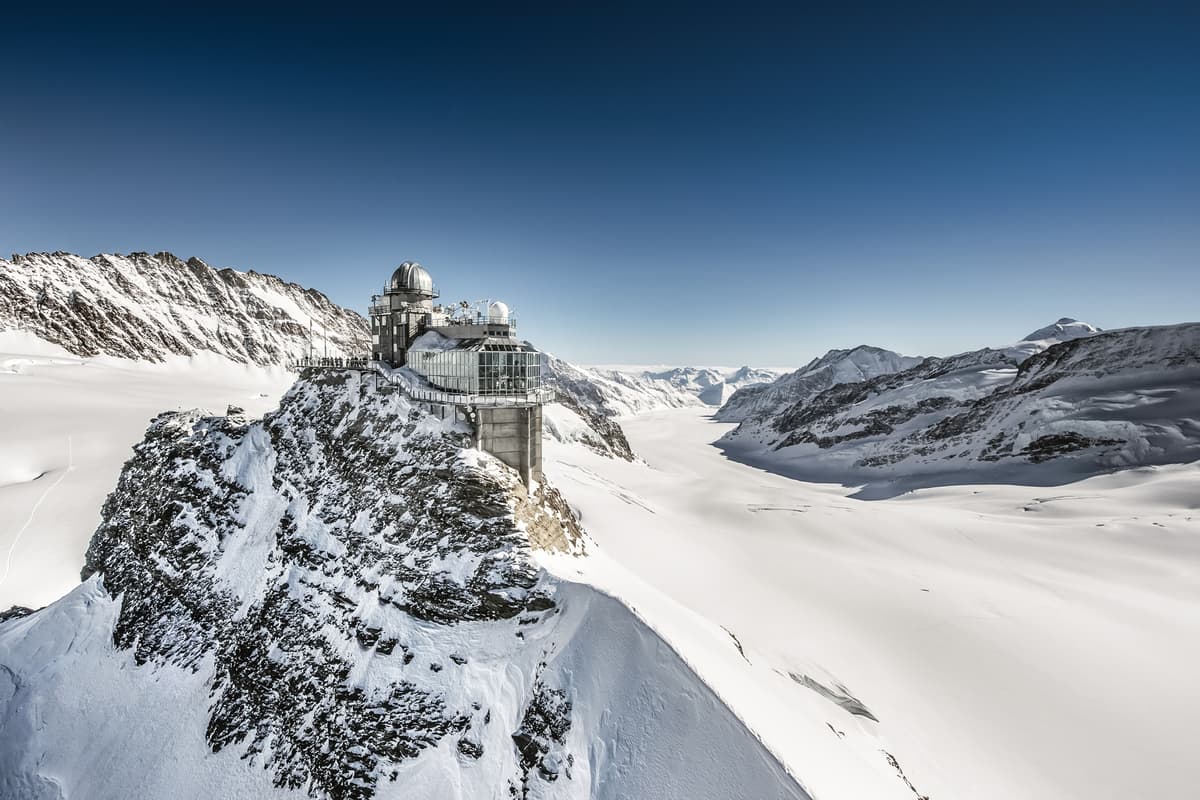
This is where the two trips genuinely diverge. Lucerne's summits are built for half-days: Pilatus (2,132 m) is reached by the world's steepest cogwheel railway — a 48% gradient — usually done as the "golden round trip" of boat, cogwheel and cable car; Rigi (1,798 m), the "Queen of the Mountains", offers gentler rack railways and open panoramas over Lake Lucerne. Both are excellent — and both return you to the city for dinner. Mt Titlis (3,238 m, glacier and year-round snow) is Lucerne's high-altitude answer, but it's a day trip via Engelberg rather than a hometown peak. The Jungfrau region plays a different sport: Jungfraujoch is a full-day rail expedition to 3,454 m with an Ice Palace and glacier views, Schilthorn adds the Bond-film summit and the region's widest 360° panorama, and Grindelwald First turns a mountain into an activity park with its Cliff Walk and the Bachalpsee hike. Verdict: for a mountain moment, Lucerne's pair is enough and wonderfully efficient; for the mountain trip, only the Jungfrau region delivers the scale.
| Lucerne's summits | Interlaken's summits | |
|---|---|---|
| Headliners | Pilatus 2,132 m · Rigi 1,798 m · Titlis 3,238 m (via Engelberg) | Jungfraujoch 3,454 m · Schilthorn 2,970 m · First 2,168 m |
| Time needed | Half-days from the city (Titlis a full day) | Full days — the scale demands it |
| The signature | World's steepest cogwheel (48%) up Pilatus | Europe's highest railway station, glacier country, 401 reviews at 4.6★ |
| Snow guarantee | Titlis only | Jungfraujoch year-round — glacier at the top |
| Cost logic | Cheaper per outing, easily DIY | Bigger tickets — guided Jungfraujoch from $338 — but bigger days |
What a Perfect Day in Each Actually Looks Like
A perfect Lucerne day
- Morning: Chapel Bridge before the crowds, coffee in the old town, the Lion Monument and a stroll along the Musegg Wall towers
- Midday: paddle-steamer cruise on Lake Lucerne — lunch on the water with the peaks as a backdrop
- Afternoon: the Pilatus golden round trip — boat out, the 48% cogwheel up, cable car home
- Evening: lakefront dinner in a city that's still awake — the part Interlaken can't match
A perfect Interlaken day
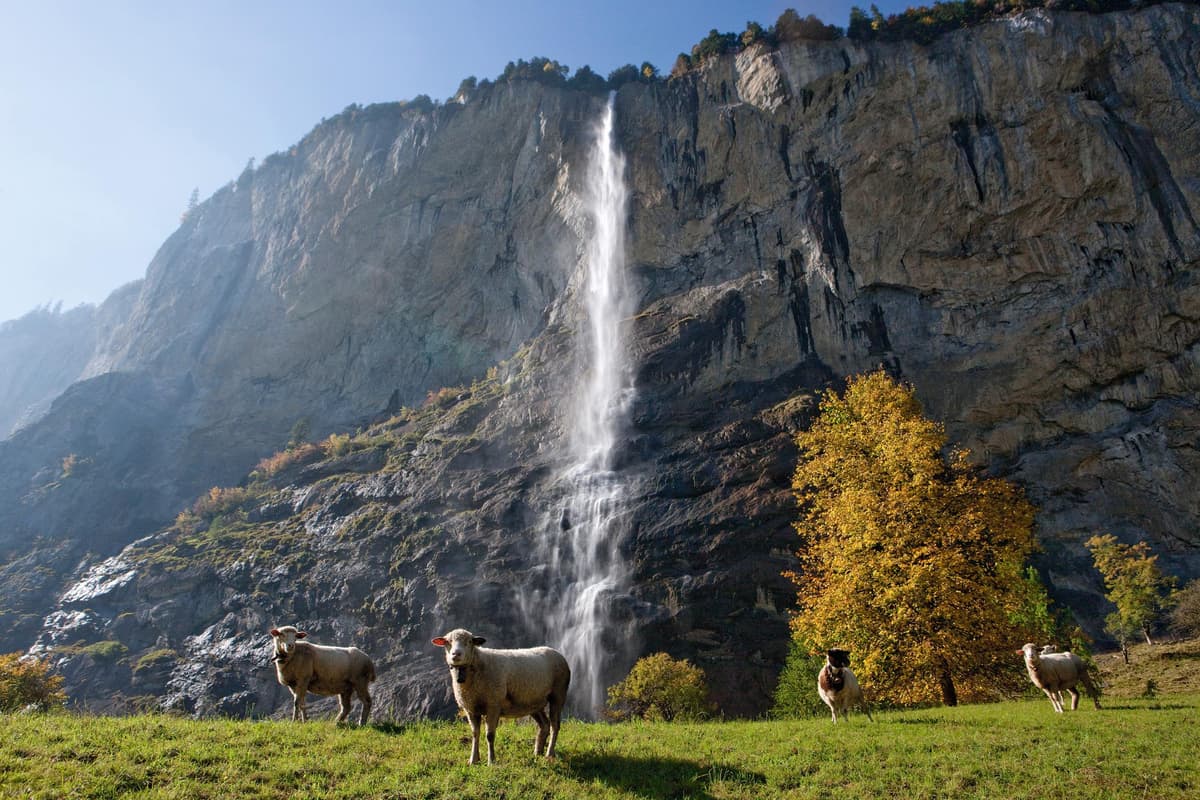
- Morning: BOB train into the Lauterbrunnen valley — Staubbach Falls thundering beside the village, 300-metre cliffs overhead
- Midday: Trümmelbach's glacier waterfalls inside the mountain, lunch with the Jungfrau massif filling the sky
- Afternoon: tandem paragliding off Beatenberg — 10–15 minutes drifting between two turquoise lakes
- Evening: watching the last paragliders land on the Höhematte lawn — quiet, alpine, exactly the point
What Interlaken Gets You That Lucerne Can't
Scale, mostly. The Jungfrau region operates on a different magnitude: the cog railway to Jungfraujoch tops out at 3,454 metres — glacier country with an indoor summit complex, 4.6★ across 401 reviews, running 365 days a year. The Lauterbrunnen valley, twenty minutes away, is a U-shaped canyon of sheer 300-metre walls and 72 waterfalls that reportedly shaped Tolkien's Rivendell. And no Swiss destination matches the adventure lineup: tandem paragliding at 4.9★ across 1037 reviews, skydiving over the Eiger, canyon swings and gorge canyoning — seven thrills within a 30-minute radius, rated on our honest fear scale. Even the free layer is strong: the Harder Kulm funicular viewpoint above town, lakeside paths, and the valley itself costs nothing to walk. The trade-off is the town: Interlaken is pleasant but functional, and its evenings are quiet. You're not visiting Interlaken; you're using it — and for what it unlocks, that's a fine deal.
Jungfraujoch — Top of Europe
Our take: The single experience Lucerne has no answer to — Europe's highest railway, any weather, any season.
Tandem Paragliding
Our take: The adventure-capital signature — launch above town, land between two lakes, no skill needed, from age 5.
72 Waterfalls E-Bike Tour
Our take: The Rivendell valley at ground level — cliffs, meadows and waterfalls Lucerne simply doesn't have.
Still Torn? Check the One Booking That Usually Settles It
In our experience the decision comes down to one question: does Jungfraujoch belong on your list? If yes, Interlaken is your base. Check live dates — reserve now, pay later, cancel free up to 24 hours, so holding a date while you decide costs nothing.
What Lucerne Gets You That Interlaken Can't
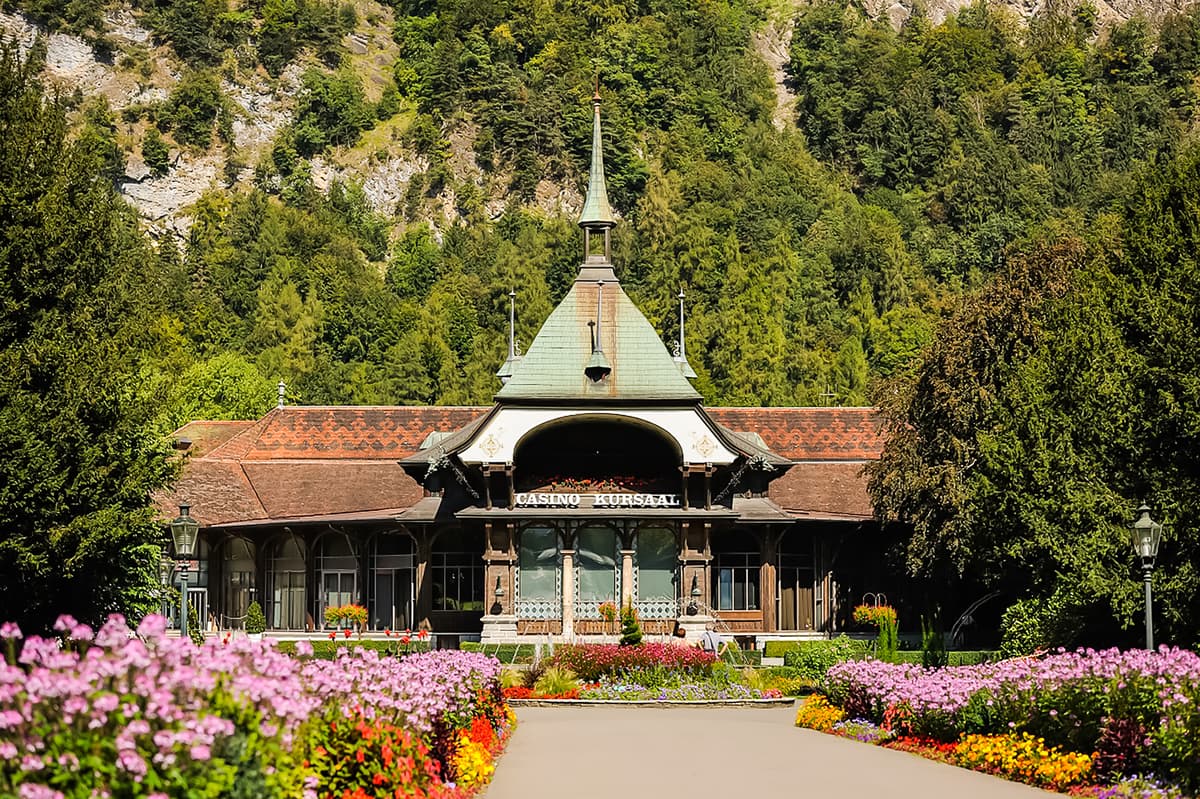
A destination you can simply be in. Lucerne needs no base-camp logic: the 14th-century Chapel Bridge with its painted gables, the old-town squares, the Lion Monument that famously moved Mark Twain, the Musegg Wall towers and a lakefront promenade served by actual paddle steamers — the city is the trip, not the staging area for it. Its museums are genuinely good, led by the renowned Swiss transport museum. Its mountains — Pilatus and Rigi — work as half-days that end with a city dinner, and Titlis adds a glacier option within day-trip range. It's also the efficient choice from Zurich at roughly 45–50 minutes by train, which makes it the better pick for trips of two days or less. What it can't offer is scale: its home summits sit around 1,800–2,100 metres against the Jungfrau region's 3,454, and its adventure menu is a fraction of Interlaken's. We review Interlaken tours, not Lucerne ones — for Lucerne's lineup, browse the Lucerne catalogue here and apply the same rules we preach everywhere: review volume first, free cancellation always.
Who Wins Each Season?
Interlaken, for the waterfalls
Snowmelt sends the Lauterbrunnen valley's 72 waterfalls into maximum flow — May and June are the spectacle months. Lucerne is pleasant and quieter, but spring is the valley's show.
A draw — book either early
Both peak together: Lucerne's lake life and festivals against Interlaken's full adventure season. Prices and crowds peak too. Summer is when doing both on one trip makes the most sense.
Slight edge: Interlaken
The famous clear-view window — crisp air and stable summit visibility favour the big-mountain days, and Jungfraujoch is at its most reliable. Lucerne's golden old town is a photogenic consolation prize.
Depends what winter means
Snow activities — sledding, snowshoeing, beginner skiing — belong to Interlaken, where ten tours run all season. Festive city atmosphere, lights and museum weather belong to Lucerne.
The Verdict by Traveller Type
Do both if you can
The classic first Switzerland trip is Zurich → Lucerne → the scenic express → Interlaken. If forced to choose: whichever matches the photos that made you book the flight.
Interlaken, no contest
Seven thrills within thirty minutes — rated 1–5 on our fear scale. Lucerne has nothing comparable; don't overthink this one.
Both work — differently
Lucerne: the transport museum, boats and easy pavements. Interlaken: the flat Lauterbrunnen valley floor where kids run free, plus paragliding from age 5 as the family story.
Lucerne evenings, Interlaken days
Romance-of-the-old-town points go to Lucerne. Shared-adrenaline-memory points go to Interlaken. The split-stay itinerary was practically designed for couples.
Interlaken, by subject matter
Lucerne gives you one iconic bridge shot and lovely lanes. The Jungfrau region gives you Staubbach Falls, glacier panoramas, cliff villages and paragliders over turquoise lakes — a portfolio, not a postcard.
Lucerne, comfortably
Museums, concerts, café mornings and a walkable old town — with Rigi as the gentlest big view in Switzerland when the mood strikes. Interlaken would leave you restless.
How to Do Both: The Luzern–Interlaken Express
This is the part most comparison articles bury: you don't have to choose. The Luzern–Interlaken Express runs direct between the two in about 1 hour 50 minutes, climbing over the Brünig Pass (1,002 m) past a string of lakes and alpine meadows — it's widely considered one of Switzerland's most scenic standard train rides, no reservation needed, covered by the usual rail passes. The itinerary that uses both properly: fly into Zurich → 2 nights Lucerne (old town, lake cruise, one half-day summit) → the scenic express → 2–3 nights Interlaken (Jungfraujoch day, Lauterbrunnen day, one adventure booking) → back to Zurich. That's the classic first-timer's Switzerland in five or six nights, and it beats forcing either destination to imitate the other. One warning: don't route between them via Bern to "save time" — the fast way skips the Brünig scenery that should be a highlight of the trip.
Pick Lucerne
Closer to Zurich, zero logistics, and a complete experience in itself. Save the Jungfrau region for the trip it deserves.
Pick Interlaken
Enough time for the formula: one peak, one adrenaline booking, one lake or valley day. The mountains need the full days.
Do both
Two nights Lucerne, the scenic express over the Brünig Pass, then the Jungfrau region. The classic route for a reason.
The Five Mistakes People Make with This Choice
1. Comparing the towns instead of the trips. Interlaken town will always lose a beauty contest with Lucerne — and it's the wrong contest. Compare a city break against a mountain region and the decision gets easy. 2. Trying to do both in two days. You'll spend a quarter of your trip on trains and shortchange both; below four days, pick one. 3. Day-tripping between them from a single base. Around four hours of round-trip rail turns a highlight into a commute — split the stay instead. 4. Taking the fast route via Bern. The Luzern–Interlaken Express over the Brünig Pass IS part of the experience; routing around it to save minutes is trading gold for small change. 5. Judging Interlaken by its main street. Give it a day-one evening walk and you'll wonder what the fuss is about; give it a Lauterbrunnen morning or a Jungfraujoch day and you'll understand why it outdraws prettier towns.
Lucerne is the better town — a lakeside city with a medieval old town and real evenings. Interlaken is the better base — it unlocks the Jungfrau region: Jungfraujoch at 3,454 m, the Lauterbrunnen valley and Switzerland's densest adventure-sports lineup. Choose by trip type: city and culture → Lucerne; alpine scenery and adventure → Interlaken. With four or more days, do both — they're under two hours apart by scenic direct train.
About 1 hour 50 minutes by the direct Luzern–Interlaken Express, which climbs over the Brünig Pass (1,002 m) and ranks among Switzerland's most scenic regular train rides — no reservation needed. By car it's a similar timeframe over the pass road in summer.
If you have a spare day or two, yes — it offers exactly what Interlaken lacks: an old town worth wandering, museums, and city evenings. Many travellers route Zurich → Lucerne → Interlaken so the scenic express becomes part of the trip rather than a detour. With a packed Jungfrau itinerary and no spare nights, skip it without guilt — the mountains are the harder thing to come back for.
Lucerne, on pure logistics — 45–50 minutes each way leaves a full day for the city and lake. Interlaken is ~2 hours each way, which still works but compresses the day; if the Jungfrau region is the goal, the guided three-village day trip ($122, 8,448 reviews) handles those logistics better than DIY.
Different strengths: Lucerne does festive city winter — lights, markets season, museums for bad weather. Interlaken does actual winter activities: night sledding, snowshoeing, a beginner ski taster and Jungfraujoch running 365 days. If winter means snow experiences, Interlaken wins clearly — our winter guide covers what's open. If it means atmosphere with a city comfort layer, Lucerne.
Honestly: it's pleasant, not remarkable — a resort strip between two beautiful lakes with the Höhematte lawn and paragliders landing on it. Nobody's trip highlight is Interlaken town, and nobody's trip is worse for basing there. Its value is position: 20 minutes from Lauterbrunnen, the start of the Jungfraujoch line, and walking distance to every adventure outfitter.
Pilatus (2,132 m, reached by the world's steepest cogwheel at 48%) and Rigi (1,798 m) are excellent half-day city summits — panoramas, then back for dinner. Jungfraujoch (3,454 m) is a different category: a full-day journey into glacier country with an indoor summit complex, snow year-round and 401 reviews behind the guided version. Scale and commitment both roughly double — as does the memorability.
Both are expensive Swiss destinations; the difference is in what you spend on. Lucerne's core pleasures are cheap-to-free — old town walks, lake promenades — with mid-priced summit round trips. Interlaken's headline days carry bigger tickets: guided Jungfraujoch from $294, adventure sports $150–533. But its budget floor is real too: the $52 boat day pass and the free-to-walk Lauterbrunnen valley are two of the best-value days in Switzerland.
Technically — you'd see the Chapel Bridge, ride the express, walk Interlaken's main street and go home having experienced neither. Both places reward what a one-day sprint removes: Lucerne's evenings and Interlaken's mountain days. If one day is genuinely all you have, pick a single base and do it properly.
Split the stay rather than day-tripping between them — two nights Lucerne then two to three in the Interlaken area keeps mornings unhurried and puts the scenic express in the middle of the trip. If forced to pick one base for both, Lucerne day-trips to Interlaken poorly (4 hours of round-trip trains); basing in Interlaken and day-tripping to Lucerne works slightly better but still burns a day in transit.
Yes — it's one of the few transfers in Europe that doubles as an attraction. The Luzern–Interlaken Express climbs from Lake Lucerne over the Brünig Pass and drops toward Lake Brienz's turquoise, passing smaller lakes and meadow valleys along the way, in ordinary comfortable carriages with big windows. It's part of the GoldenPass corridor, runs roughly hourly, and needs no seat reservation — just don't route via Bern and miss it.
If you've settled on the Jungfrau region, yes — the next-level question is which village to base in. Interlaken is the transport hub with the most beds and every outfitter; Lauterbrunnen and Grindelwald are smaller, more atmospheric and deeper in the scenery. Our valley guide covers that trade-off, including the Mürren vs Wengen question above the valley floor.
How this guide works
The Interlaken side of this comparison is built on the 23 full tour reviews on this site — each checked against live listings, verified 2025-2026 reviews and operator information. The Lucerne side draws on well-established, stable facts about the city and its summits rather than tour reviews, which is also why our booking links point to Interlaken products and a general Lucerne catalogue rather than specific Lucerne tours we haven't vetted.
Where the honest answer favours Lucerne — the prettier town, the better short trip from Zurich — this guide says so. Last updated: July 2026.
More Interlaken Guides
All 23 Interlaken Tours, Ranked
If Interlaken wins your comparison — here's everything worth booking, ranked by verified review data.
Interlaken from Zurich
Guided day trip vs DIY train — the honest comparison, timings and the one-day reality check.
Lauterbrunnen Valley Tours
The single strongest argument for team Interlaken — 72 waterfalls and two car-free cliff villages.
More Interlaken Trip Planning
Interlaken from Lucerne
Every reviewed Interlaken day trip departing Lucerne, with prices, durations and ratings, compared against the direct Luzern-Interlaken Express.
Interlaken Itinerary
Day-by-day Interlaken trip plans for 1, 2, 3 and 5 days with the tours each plan is built around, honest costs and a wet-weather alternative.
Made Your Choice?
If it's Interlaken — start with the full ranking of all 23 tours. If it's both — the scenic express over the Brünig Pass is waiting between them.
See All 23 Tours, Ranked →